Showing posts with label Council. Show all posts

Wednesday, January 13, 2021

January Council Meeting Preview

The Gulf of Mexico Fishery Management Council will meet by webinar January  25-28, 2021. The Committee and Council Agendas, and meeting materials are available on the Council Meeting Webpage. You will be able to join the webinar at this link during the meeting. 

Public testimony will be held on Wednesday, January 27, 2021 from 2:30 – 5:00 PM eastern. Details on how to successfully join the meeting and provide testimony can be found here.

Additionally, the Gulf Council and NOAA Fisheries will host a question and answer session with the public from 5:00 – 6:00 PM on Tuesday, January 26, 2021. If you want to speak to ask a question, you must join the webinar online. Alternatively, during the meeting, you can email questions to gulfcouncil@gulfcouncil.org or text them to (813) 317-6220 and a staff member will ask on your behalf. To listen in by phone, call :  1- (631) 992-3221, access code:  142.143.734

The Council is scheduled to take final action on four items at this meeting. Below is a brief description of each item under consideration and information on how to learn more and submit comment:

Lane Snapper Catch Limits and Accountability Measures

The most recent update assessment of lane snapper, which uses the new calibrated landings and effort data from the Marine Recreational Information Program Fishing Effort Survey, shows an increase in stock biomass. As a result, the Council is considering increasing the overfishing limit, acceptable biological catch, annual catch limit, and annual catch target for lane snapper. Additionally, the Council is considering modifying the in-season closure accountability measure for lane snapper because the annual catch limit has been exceeded numerous times in recent years. 

• Read the document
• Watch the public hearing video
• Submit comment


Gray Triggerfish Catch Limits

A 2020 interim analysis of gray triggerfish showed that there was likely an increase in stock biomass in recent years. The analysis suggested an increase to the gray triggerfish acceptable biological catch, so the Council is considering increasing the annual catch limits and annual catch targets accordingly. 

• Watch the public hearing video
• Submit comment


Status Determination Criteria and Optimum Yield for Reef Fish and Red Drum

The Council must define a maximum sustainable yield (MSY), a maximum fishing mortality threshold (MFMT), a minimum stock size threshold (MSST), and an optimum yield (OY) for all managed stocks. These reference points are the basis for determining the health of each stock and are required under the Magnuson-Stevens Act and National Standard 1 guidelines. A list of fish stocks impacted by this document are below:

• Read the document
• Watch the public hearing video
• Submit comment


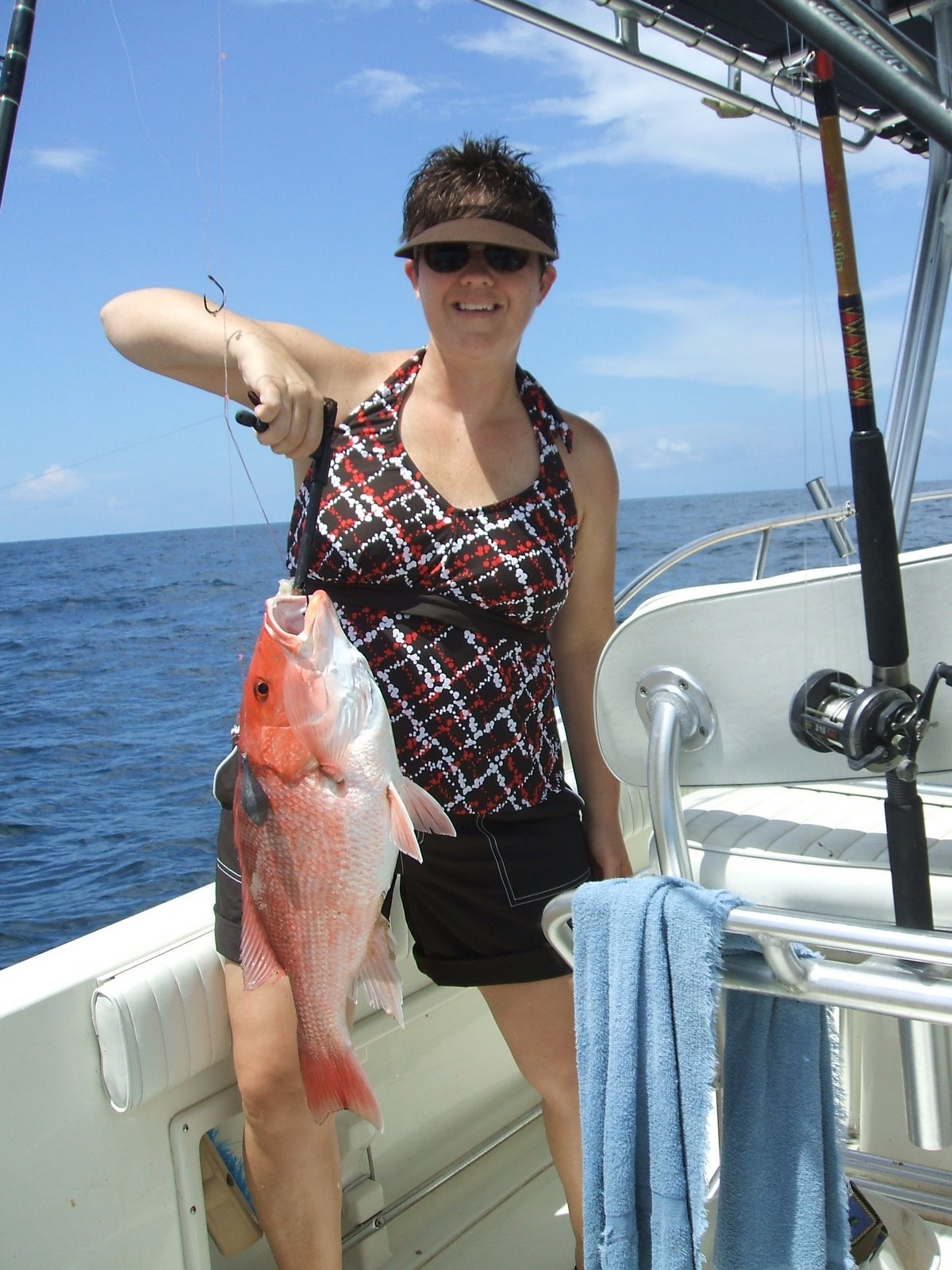
Red Snapper Recreational Data Calibration and Recreational Catch Limits

NOAA Fisheries has been using the federal Marine Recreational Information Program (MRIP) in concert with landings and effort data collected from Gulf state data collection programs to monitor private recreational red snapper seasons. Some estimates generated by the state data collection programs differ from MRIP estimates that were used to generate the current annual catch limits.  Adjustments to the state-specific recreational annual catch limits are being considered to account for the harvest monitoring programs used by each state and to reduce the likelihood of exceeding the red snapper private angling component annual catch limit.  

• Read the document
• Submit comment


Friday, August 21, 2020

August Council Meeting Preview


The Gulf of Mexico Fishery Management Council will meet by webinar August 24-28, 2020. The Committee and Council Agendas, and meeting material are available on the Council Meeting Webpage.


You will be able to join the webinar at this link during the meeting. Public testimony will be held on Thursday beginning at 1:20 PM EDT. Details on how to successfully join the meeting and


provide testimony can be found here.


Additionally, the Gulf Council and NOAA Fisheries will host a Question and Answer Session with the public beginning at 4:30 PM, EDT on Wednesday, August 26, 2020. Details on how to join that session can be found here.


The Council will hear presentations on a number of interesting topics including: Shrimp logbooks, commercial logbooks, the Southeast For-Hire Electronic Reporting Program, and depredation by marine mammals. The following is a brief summary of some of the issues that will be discussed next week:


Red Drum and Coastal Migratory Pelagic Advisory Panel Member Selection

The Council will make final appointments to its Red Drum and Coastal Migratory Pelagic Advisory Panels. Advisory Panel members are appointed for a 3-year term.


Impacts of COVID-19

The Council plans to continue discussing the impacts of the COVID-19 pandemic and may consider management changes to ease those impacts. The Council will continue to follow guidelines set by the Magnuson-Stevens Fishery Conservation and Management Act while considering temporary or long-term changes to regulations that may offset economic impacts from the pandemic.


Recommendations on Executive Order 13921

The President of the United States recently signed an Executive Order on Promoting American Seafood Competitiveness and Economic Growth. The Executive Order aims to improve the competitiveness of our domestic seafood industry, put more Americans to work, and place more sustainably sourced and safe-to-eat seafood products on our families’ tables. Section 4 of the Executive Order, Removing Barriers to American Fishing, requires the Regional Fishery Management Councils to submit a prioritized list of recommended actions to reduce burdens on domestic fishing and to increase production within sustainable fisheries. The Council will review public input and is expected to provide a prioritized list of regulations for removal.


Status Determination Criteria 

The Council must define a maximum sustainable yield (MSY), a maximum fishing mortality threshold (MFMT), a minimum stock size threshold (MSST), and an optimum yield (OY) for all managed stocks. These reference points are the basis for determining the health of each stock and are required under the Magnuson-Stevens Act and National Standard 1 guidelines. The Council will work on a public hearing draft of Reef Fish Amendment 48/Red Drum Amendment 5, which aims to define, and in some cases modify, existing status determination criteria for reef fish and red drum.


State and Federal Recreational Data Collection Calibrations

The Council will discuss  calibration efforts involving recreational data collection programs. First, it will consider the Federal Marine Recreational Information Program’s (MRIP) transition to a new survey methodology, the Fishing Effort Survey (FES), and the resulting recreational data calibrations.  The Council will also hear a summary of the recent Red Snapper MRIP and State Data Calibration Webinar.  The Council will hear recommendations about how state survey data may be used in federal stock assessments and it will hear recommendations from its Scientific and Statistical Committee about how to calibrate results from each of the different surveys so they can be used in science and management.


Photo: FWC
Red Grouper Catch Limits and Sector Allocations

The Council will continue working on Reef Fish Amendment 53 which considers modifying red grouper commercial and recreational sector allocations and catch limits based on the results of the latest stock assessment (SEDAR 61).  The assessment showed that the red grouper stock is lower than it has ever been.  Additionally, the assessment used the new Marine Recreational Information Program’s (MRIP) calibrated Fishing Effort Survey landings and effort estimates, which increased the estimates of recreational harvest.


Commercial Individual Fishing Quota Programs

At this meeting, the Council will review a public hearing draft of amendment 36B which considers requiring individual fishing quota shareholder accounts to be associated with a commercial reef fish permit.


Lane Snapper

The most recent update assessment of lane snapper uses the new calibrated landings and effort data from the Marine Recreational Information Program Fishing Effort Survey and allows for a significant increase in the acceptable biological catch level.  The Council will review guidance

Photo: Hubbard's Marina
from its Scientific and Statistical Committee (SSC) and work on a document to revise the lane snapper annual catch limits.


Yellowtail Snapper

The Council will hear a summary of the most recent yellowtail snapper stock assessment (SEDAR 64). The assessment was conducted for the entire Southeast which includes Gulf of Mexico and South Atlantic Council jurisdictions. Yellowtail is not experiencing overfishing and is not overfished. The Council’s Scientific and Statistical Committee plans to discuss appropriate methods for determining the Overfishing Limit and Acceptable Biological Catch levels for the yellowtail stock at a meeting in late September. The Council will consider updating the yellowtail snapper acceptable biological catch limits after it hears Overfishing Limit and Biological Catch recommendations from its Scientific and Statistical Committee.


Cobia

The Council will receive the results of the most recent Cobia stock assessment update. The update, which incorporates new recreational catch information from the MRIP Fishing Effort

Photo: Rosemary White
Survey, shows that Cobia is not overfished but is currently experiencing overfishing.  The Council will review its Scientific and Statistical Committees Overfishing Limit and Acceptable biological Catch recommendations and may initiate an amendment to adjust the current cobia catch thresholds.

Monday, August 5, 2019

August Council Meeting Preview


The Gulf of Mexico Fishery Management Council will meet at the Hyatt Centric French Quarter in New Orleans, Louisiana on August 12-15, 2019. As always, we would love to have you join us in person, but if that’s not practical you’re welcome to tune in via webinar.

Public comment will take place on Wednesday, August 14th, from 2:00 – 5:30 PM. If you can’t testify in person, visit our “Amendments Under Development” webpage to learn about what we’re working on and submit your comments.

At this meeting, the Council will be presented an application for an Exempted Fishing Permit. The Council will take testimony on the permit and make a recommendation to NOAA Fisheries regarding whether or not the project should be approved. You’re welcome to read the application and submit your comments on the proposed exempted fishing permit:

The Agenda and Meeting Materials will help you prepare for the meeting. The following is a brief summary of some of the issues that will be discussed:


Gray Snapper
The Council expects to take final action on an amendment that considers setting or revising values that will be used to determine stock status for gray snapper and adjust the annual catch limits. Currently, the Council has chosen preferred alternatives for gray snapper status determination criteria that minimize buffers and are consistent with the idea that the gray snapper stock is quite resilient. Also, under the Council’s preferred alternatives, the annual catch target will be eliminated and the new annual catch limit will be set at a value between the existing annual catch target and annual catch limit.


Modification to the Recreational For-Hire Red Snapper Annual Catch Target Buffer
The Council plans to take final action on a Framework Action that considers reducing the buffer between the federal for-hire component annual catch limit and annual catch target.  A previous framework action modified the buffer by reducing it from 20% to 9% for 2019 only. Reducing the buffer for the for-hire component on a more permanent basis is expected to allow a greater harvest while continuing to constrain landings to the annual catch limit.  The action does not address the private angling component, because private anglers are being managed by the individual states.


Recreational Greater Amberjack
Photo: Hubbards Marina
The Council will begin work on a framework action that considers modifying recreational management measures with the goal of allowing recreational harvest in both spring and fall. Recent recreational greater amberjack management changes modified the fishing year so that the quota renews on August 1 instead of January 1.  The fishing season opens in the fall from August – October with the new quota, and then any remaining quota is used to open a May season in the following year.  These changes went into effect in 2018, and the entire quota was harvested in the 2018 August – October season, with no May 2019 season. The document includes options that consider changing the fishing year, bag limits, and modifications to the current season structure.

For-Hire Trip Limits
Photo: Jim Green
Anglers on federal for-hire trips may retain two daily bag limits of reef fish, king mackerel, and Spanish mackerel if the trip lasts longer than 24 hours, has two licensed captains onboard, and all anglers are in possession of a receipt showing the duration of the trip.  Currently, anglers on such trips may not retain their second daily bag limit until 24 hours have passed.  However, this is not how many operators have fished historically.  The Council will work on a framework amendment that considers modifying the two-day bag limit allowance for multi-day federal for-hire trips.

Red Snapper Allocation
The Council will continue work on Reef Fish Amendment 52 which considers reallocating the red snapper annual catch limit between recreational and commercial sectors.. The Council previously passed Amendment 28, which reallocated red snapper by shifting 2.5% of the commercial sector’s allocation to the recreational sector. However, a lawsuit resulted in the district court decision which vacated Amendment 28 and restored the previous sector allocations of 49% recreational and 51% commercial.

Status Determination Criteria
The Council will continue to work on an amendment that aims to define, and in some cases modify, existing biological reference points for reef fish and red drum. The Council must set maximum sustainable yield (MSY), maximum fishing mortality thresholds (MFMT), minimum stock size thresholds (MSST), and optimum yield levels for managed stocks. These reference points are the basis for determining the health of each stock and are required under the Magnuson-Stevens Act and National Standard 1 guidelines.


Modifications to Commercial Individual Fishing Quota Programs
The Council will review a draft of Amendment 36B, which considers modifying the commercial individual fishing quota programs with the intent to assist small participants and new entrants to the IFQ programs, reduce discards, and increase access to shares to actively fishing, eligible commercial fishermen.

Friday, October 12, 2018

October Council Meeting Preview


The Gulf of Mexico Fishery Management Council meets October 22-25, at the Renaissance Battle House in Mobile, Alabama. We invite you to join us in person or watch a live broadcast of the meeting.

Public comment will be held on Wednesday, October 24th, from 1:30 – 4:30. If testifying in person isn’t an option, visit our “Amendments Under Development” web page to learn about the different issues we’re working on and submit your comments.

The meeting agenda and materials will help you prepare for the meeting. Below, you’ll find a summary of some of the fishery issues the Council plans to address:

Cobia Size and Possession Limits
The Council plans to hear a summary of public comments received and take final action on Costal Migratory Pelagic Framework Action 7. Anglers have expressed concern for what appears to be a dwindling cobia population and asked the Council to address the issue. Landings remained relatively consistent from 2012-2016, however, there was a decrease observed in 2017. The Council is considering reducing cobia harvest by decreasing the bag limit and increasing the minimum size limit.

Photo: David Payne

Historical Captain Endorsements
The Council will review an abbreviated framework action that considers converting historical for-hire captain endorsements to federal for-hire permits. There are currently 31 historical captains with both reef fish and coastal migratory pelagic (CMP) permits, and one captain with a CMP permit. At this meeting, the Council will consider new options that would modify the passenger capacity associated with the endorsement.

State Management of Red Snapper
The Council will continue to work on a suite of documents that consider permanently allowing each Gulf state to manage a portion of the recreational red snapper quota in federal waters. In addition to a previously considered alternative that would allow the states to collectively decide whether or not to include federal for-hire vessels in state management, the Council will consider new alternatives that could allow individual states the option to manage their federal for-hire vessels.

Carryover of Unharvested Quota
The Council will look at a draft of an amendment that considers allowing the portion of the allowable catch that isn’t harvested, due to an early quota closure, to be rolled over into the following year’s allowable catch.
Photo: Hubbards Marina


Gray Snapper
Based on the current criteria, the latest stock assessment determined that gray snapper is considered overfished and undergoing overfishing. Fortunately, the recommended acceptable biological catch levels that resulted from the assessment are only slightly lower than the current annual catch limits. As a result, the Council will review a draft amendment that considers establishing criteria to determine the overfished and overfishing status of the stock; modifying annual catch limits, and setting other reference points.
Photo: Florida Sea Grant

Shrimp
The Council will look at a draft of Shrimp Amendment 18, which considers increasing the amount of shrimp effort allowed in the special area that is monitored for juvenile red snapper bycatch. Analysis shows that the effort reduction threshold, which requires that shrimp effort in the area be 67% below the effort in the baseline years of 2001-2003 can be reduced to 60% without affecting the rebuilding of the red snapper stock.