Showing posts with label meeting. Show all posts

Wednesday, January 13, 2021

January Council Meeting Preview

The Gulf of Mexico Fishery Management Council will meet by webinar January  25-28, 2021. The Committee and Council Agendas, and meeting materials are available on the Council Meeting Webpage. You will be able to join the webinar at this link during the meeting. 

Public testimony will be held on Wednesday, January 27, 2021 from 2:30 – 5:00 PM eastern. Details on how to successfully join the meeting and provide testimony can be found here.

Additionally, the Gulf Council and NOAA Fisheries will host a question and answer session with the public from 5:00 – 6:00 PM on Tuesday, January 26, 2021. If you want to speak to ask a question, you must join the webinar online. Alternatively, during the meeting, you can email questions to gulfcouncil@gulfcouncil.org or text them to (813) 317-6220 and a staff member will ask on your behalf. To listen in by phone, call :  1- (631) 992-3221, access code:  142.143.734

The Council is scheduled to take final action on four items at this meeting. Below is a brief description of each item under consideration and information on how to learn more and submit comment:

Lane Snapper Catch Limits and Accountability Measures

The most recent update assessment of lane snapper, which uses the new calibrated landings and effort data from the Marine Recreational Information Program Fishing Effort Survey, shows an increase in stock biomass. As a result, the Council is considering increasing the overfishing limit, acceptable biological catch, annual catch limit, and annual catch target for lane snapper. Additionally, the Council is considering modifying the in-season closure accountability measure for lane snapper because the annual catch limit has been exceeded numerous times in recent years. 

• Read the document
• Watch the public hearing video
• Submit comment


Gray Triggerfish Catch Limits

A 2020 interim analysis of gray triggerfish showed that there was likely an increase in stock biomass in recent years. The analysis suggested an increase to the gray triggerfish acceptable biological catch, so the Council is considering increasing the annual catch limits and annual catch targets accordingly. 

• Watch the public hearing video
• Submit comment


Status Determination Criteria and Optimum Yield for Reef Fish and Red Drum

The Council must define a maximum sustainable yield (MSY), a maximum fishing mortality threshold (MFMT), a minimum stock size threshold (MSST), and an optimum yield (OY) for all managed stocks. These reference points are the basis for determining the health of each stock and are required under the Magnuson-Stevens Act and National Standard 1 guidelines. A list of fish stocks impacted by this document are below:

• Read the document
• Watch the public hearing video
• Submit comment


Red Snapper Recreational Data Calibration and Recreational Catch Limits
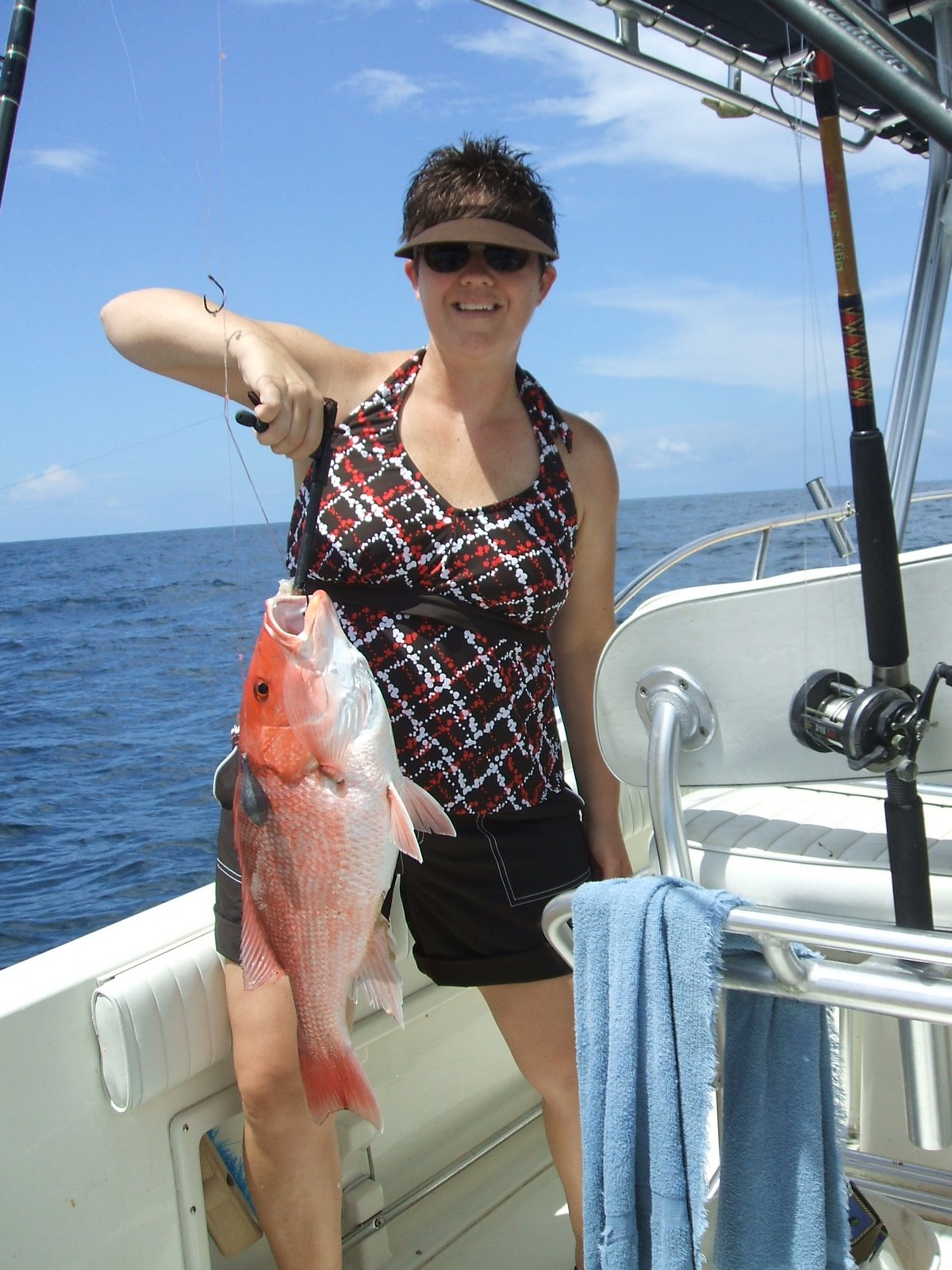
NOAA Fisheries has been using the federal Marine Recreational Information Program (MRIP) in concert with landings and effort data collected from Gulf state data collection programs to monitor private recreational red snapper seasons. Some estimates generated by the state data collection programs differ from MRIP estimates that were used to generate the current annual catch limits.  Adjustments to the state-specific recreational annual catch limits are being considered to account for the harvest monitoring programs used by each state and to reduce the likelihood of exceeding the red snapper private angling component annual catch limit.  

• Read the document
• Submit comment


Wednesday, October 23, 2013

October 2013 Council Meeting Preview


Photo: Mark Miller

The Gulf of Mexico Fishery Management Council will meet next week in New Orleans, Louisiana to work on some fishery issues that may interest you. You are welcome to attend the meeting in person or you can listen from your computer.

The committee agenda and full Council agenda will help you figure out when the Council plans to discuss the topics that you’re interested in.

Join us for public comment, which will be held on Wednesday, October 30th from 1:30 – 4:30 pm. We also invite you to an informal question and answer session that will be held on Tuesday night immediately after Council adjourns for the day.

Read on for a brief description of some of the issues that Council will discuss next week:

Coastal Migratory Pelagics
Photo: Emily Muehlsten
The Council plans to take final action on two amendments that have been developed jointly with the South Atlantic Fishery Management Council. Amendment 20A (formerly Amendment 19) addresses the recreational sale of mackerel, elimination of inactive commercial king mackerel permits, and income requirements. Amendment 20B (formerly Amendment 20) addresses commercial trip limits, seasons, transit, and the annual catch limit for cobia. To learn more about these amendments visit this link for videos, amendment guides, and public comments.

Definition of For-Hire Fishing
The Council will review a draft framework action that considers clearly defining for-hire (charter/headboat) fishing trips. This framework aims to enhance enforcement of permit requirements by eliminating the ability of private vessels to exchange fees, goods, or service in exchange for for-hire fishing activities.  

Photo: Scott Hickman
Recreational Red Snapper Regional Management
The Council expects to take final action on Amendment 39, which considers dividing the federal recreational red snapper quota among different regions in the Gulf. This will give each region more flexibility to choose fishing regulations that best suit local needs. If you’re interested in learning more about regional management you can read this guide or watch this video.

Sector Separation
After tabling discussions a year ago, the Council will resume consideration of sub-dividing the recreational allocations into private, for-hire, and possibly headboat sectors. For more information on allocation and sector separation read this Gulf Currents Blog.

For-Hire Permit Conditions
Photo: Emily Muehlstein
Vessels with federal for-hire reef fish permits must comply with the more restrictive of state or federal reef fish regulations when fishing in state waters. The Council is considering revising this requirement to allow federally permitted for-hire vessels to fish during state seasons when state regulations are inconsistent with federal regulations.

As always, if you have any questions don’t hesitate to contact us. 

Wednesday, June 12, 2013

June 2013 Council Meeting Preview


Photo: Emily Muelstein
The Gulf of Mexico Fishery Management Council will meet next week at the Crowne Plaza in Pensacola, Florida. The meeting is open to the public, but if you can’t make it you can listen in live from your computer.

The committee agenda and full Council agenda will help you figure out when the Council will be discussing the topics that you want to hear.

Public comment will be held Thursday, June 20th beginning at 1:00 pm. An informal question and answer session will be held Tuesday evening immediately after the Council adjourns (around 5:15).

The following is a brief description of some of the things the Council plans to address next week:

Red Snapper
·      Stock Assessment Results - A benchmark red snapper stock assessment was recently completed. The Council’s the Scientific and Statistical Committee (SSC) reviewed the assessment results and increased the acceptable biological catch for three years. The Council will review the assessment and, based on the SSC recommendations will set quotas for 2013 and beyond.

Photo: Capt. Murphy
·      Allocation - The Council will revisit the allocation scoping document that considers changing the division of the red snapper annual catch limit between the commercial and recreational fishing sectors. Currently, 49% of red snapper is allocated to the recreational sector and 51% to the commercial sector.

·      Regional Management – The Council will review a public hearing draft of Amendment 39, which considers dividing the federal red snapper quota among states/regions, giving them more flexibility in choosing seasons and bag limits. Regional management would not necessarily result in more fishing days.

·      Red Snapper Individual Fishing Quota (IFQ) Program - The Council will discuss Amendment 36, which will address potential modifications to the Red Snapper IFQ Program based on the 5-year review recently accepted by the Council.

Artificial Reef Habitat Protection
The Council will discuss an options paper that considers designating petroleum platforms and artificial reefs as Essential Fish Habitat. This article “Rig Removal – Essential Fish Habitat” explains some of the motivations and challenges associated with the actions being considered by the Council.
Photo: Mark Miller

Data Collection
·      Private Recreational Red Snapper Data – The Council will review a scoping document that considers different options, suggested by the Council's advisory panel for Private Recreational Data Collection, for improving private recreational red snapper fisheries data. 

·      Headboat Reporting Requirements-           
    The Council will take final action on a framework action that considers changing how frequently headboats are required to report their catch. 

Mackerels and Cobia
The Council will review recommendations from its advisory panel for Coastal Migratory Pelagics on Amendments 19 and 20. Amendment 19 addresses the recreational sale of king and Spanish mackerel, elimination of inactive commercial king mackerel permits, and income requirements for commercial fishing permits. Amendment 20 addresses trip limits, seasons, transit provisions, and annual catch limits and annual catch targets for cobia.

Photo: Capt. Murphy
Shrimp
The Council will review recommendations made by its Shrimp advisory panel shrimp and discuss a framework action that considers how to fund the Electronic Logbook Program.

Panel and Committee Selection
The Council will review resumes and select new members for the Coral and SEDAR NGO Advisory Panels, as well as the SEDAR workshop pool, Special Coral, and Special Mackerel Scientific and Statistical Committees.

If you can’t make it to the meeting, there are plenty of other ways to share your input with us. This quick video explains public involvement in fisheries management:


As always, if you have any questions please contact us.

Thursday, April 11, 2013

April 2013 Council Meeting Preview


The Gulf of Mexico Fishery Management Council will meet next week in Gulfport, Mississippi. During the meeting the Council will discuss and make decisions about a range of different fisheries issues that you might be interested in.

Photo: Mark Miller
The meeting is open to the public and we invite you to join us at the Courtyard Marriott, or you can listen in live from your computer. Check out the committee agenda and the full Council agenda to figure out when the Council will be discussing the topics that you want to hear about.

Public comment will be held Wednesday, April 17th beginning at 1:45 pm. An informal question and answer session for the public will be held Tuesday evening immediately after the Council adjourns (around 5:30).

The following is a brief description of some of the things the Council plans to address next week:

Regional Management for Recreational Red Snapper
Photo: Robert Navarro
Red snapper is managed as a single unit in the federal waters of the Gulf of Mexico. Since red snapper is subject to a Gulf-wide quota, states with inconsistent regulations impact federal management. Recently, states have begun to express a desire to make red snapper regulations that are more suitable to local needs.

The Council has been considering ways to manage the recreational red snapper quota in separate regions in the Gulf. Scoping workshops to gather public input have already been held electronically, and in cities around the Gulf. At this meeting the Council will review an options paper that was drafted using public comment, and make recommendations on how to move forward with the issue.

For-Hire Days-at-Sea Pilot Program
The Council is considering initiating a pilot program that would allow a sample of for-hire fishermen to fish a specified number of days or trips throughout the year instead of using the recreational season. The pilot would be evaluated and the Council could make an informed decision about whether a days-at-sea program should be implemented for the entire charter fleet.

The Council collected public input at scoping workshops that were held in different cities over the past few weeks. A video tutorial, quick guide, and online comment form are also available for at-home use.

It’s not too late to share your thoughts! Council will review public opinion next week and decide how to move forward.

Photo: Emily Muehlstein
Headboat Electronic Reporting for Reef Fish and Coastal Migratory Pelagics
The Council is considering alternatives that could change the frequency and method of fishery data reporting by headboat vessel operators. Improving data, especially in the recreational sector, could reduce the chance of exceeding Annual Catch Limits and triggering accountability measures. The Council will review a proposed framework action and decide how to move forward with the idea.

Funding for Electronic Logbooks for the Shrimp Industry
The Council plans to review a framework action that considers how to fund a program to install and maintain electronic logbooks on all federally permitted shrimping vessels.

Spanish Mackerel and Cobia Stock Assessments
The Council will review results and Scientific and Statistical Committee recommendations from recent benchmark stock assessments for cobia and Spanish mackerel.

Photo: Mark Miller
Red Drum
The Council will review the history of red drum management, consider current research, and begin to discuss the possibilities and obstacles to opening harvest of red drum in the federal waters of the Gulf of Mexico.

Advisory Panels
The Council will review recommendations made by the Ad Hoc Private Recreational Data Collection Advisory Panel and the Ad Hoc Artificial Substrate Advisory Panel Meetings.

The Council will also review the resumes submitted by the public and select new members for the Advisory Panels and Scientific and Statistical Committees.

As always, if you have any questions please contact us.