Showing posts with label annual catch limit. Show all posts

Tuesday, January 5, 2021

Gulf of Mexico Fishery Management Council Highlights from 2020


As 2020 comes to an end, we have an opportunity to look back on the year behind us and look forward to the year ahead. 2020 was a year filled with new challenges. The COVID-19 pandemic changed the way most of us conduct our daily business, and the Council was no exception. We spent most of this year tackling changes to the federal recreational data collection program and incorporation of state recreational data collection programs into management and while attempting to understand the implications of these changes on the health of the fish stocks themselves. The Council took final action on a few regulatory documents and made recommendations on an Executive Order, while seeing a number of new rules publish and become implemented into law this year.  Keep reading for a perspective on what we accomplished in 2020 and where we’re headed in 2021.

COVID-19 was the obviously one of the biggest issues faced by everyone this year. Fishermen across the coast were impacted differently. Initially, the Council asked stakeholders to share how the pandemic had impacted them. We heard that the commercial seafood market was interrupted as restaurants closed; recreational fishermen were also affected when charter businesses were unable to operate, and access to boat ramps was limited. The Council monitored landings throughout the year and tried to anticipate if fishing seasons could be extended or commercial quota needed to be rolled over into next year. To date, as the fishery seems to have stabilized, the Council hasn’t made any recommendations on how to mitigate impacts on the industry. Council meetings have transitioned to a completely virtual format since mid-March. We’re all anxious to return to in-person meetings; however, it’s hard to predict when that will become a safe and feasible option.  We are continuing to look at creative ways to engage stakeholders with a virtual meeting format. 

Arguably, the largest fishery management challenge faced by the Council this year is the transition to using recreational landings from the updated federal recreational data collection system and incorporating data from the new state-based recreational data collection systems. The Marine Recreational Information Program’s Fishing Effort Survey (FES) improved some of the previous system’s sampling protocols which resulted in new landings information that has to be accounted for back in time. Additionally, all of the Gulf States have developed their own recreational data collection programs, and landings data from those programs will likely be incorporated in future stock assessments and quota monitoring. Essentially, we’re transitioning to a new data currency to ensure that we’re using the same units to monitor landings as we do to set catch limits. In some cases, the new landings estimates may change our understanding of the stock size and our estimates of the amount of fish that are harvested. As each new stock assessment is completed, estimates of stock abundance and projections of how much can be harvested are updated. For the Council, this means that we need to transition our catch limits to the new data currency, so they align with stock assessment and quota monitoring units. 

The Council is currently in the process of doing that for red grouper, lane snapper, cobia, vermilion snapper, king mackerel, and red snapper. We expect to finalize management recommendations on a majority of the aforementioned species in 2021 and will continue to work on data currency changes as new stock assessments are completed.

The Council took Final Action on one document this year that recommended prohibiting all fishing year-round in both Madison-Swanson and Steamboat Lumps Marine Protected Areas and prohibiting the possession of any Gulf reef fish species year-round, except for vessels with a vessel monitoring system (VMS) and a valid commercial reef fish permit that are in transit, with all fishing gear stowed. The increased regulations in the Marine Protected Areas were made to ensure that current protections to gag spawning aggregations are working by making regulations that are more enforceable.

A number of new regulations were implemented into law this year: 

• For-Hire historical captain permits were converted to standard for-hire permits. 

• The allowable amount of commercial shrimp trawl fishing in certain areas of  federal waters was increased. 

• The red snapper buffer between the annual catch limit and annual catch target for the for-hire component of the fishery was reduced.

• The Gulf States were given authority to manage fishing season, bag limit, and minimum size limit for the private recreational component of the red snapper fishery. 

• The commercial amberjack trip limit was reduced to 1,000 pounds with a reduction to 250 pounds when 75% of the quota is landed. 

• The cobia minimum size limit increased from 33 to 36 inches fork length. 

• 13 new habitat areas of particular concern were created with fishing regulations, 8 new areas without fishing regulations were established, and regulations in 3 existing areas were modified. 

• Status determination criteria were established for gray snapper and the annual catch limits for gray snapper were reduced by small amount in 2020 and beyond. The annual catch target was removed for gray snapper.  

Next year, we expect two rules to be implemented. First, the Council has recommended modifying for-hire multiday trip limits by allowing anglers on federal for-hire fishing trips that last longer than 30 hours to possess two daily bag or vessel limits at any time during those trips. Next, new electronic for-hire reporting requirements take effect on January 5th. Captains in the Gulf will be required to make a trip declaration (hail-out) every time their vessel leaves the dock and they must complete a fishing report for each fishing trip before offloading fish. Also, position reporting requirements are expected to go into effect sometime later in 2021.  

As we say farewell several colleagues, many of us are eager for the turn of the year.  Personally, and professionally, we hope to learn from our experiences during 2020 which have, if nothing else, taught us some new tricks and helped us prioritize what is important, and what we might want to let go of once we return to “business as usual.” We do know the Council is going to continue to work as hard as we can to provide make management decisions that benefit our fishermen and our fisheries. Thank you for all your hard work this year, on and off the water.

Tuesday, May 30, 2017

June 2017 Council Meeting Preview


Public comment will be held on Wednesday, June 7 from 1:30 – 5:30 p.m. local time. If you can’t testify in person, visit our “Amendments UnderDevelopment” page to comment on, and learn about, the different issues being considered.

The meeting agenda and materials will help you prepare for the meeting and decide when to attend. The following is a quick summary of topics the Council plans to take final action on at this meeting:


Photo: NOAA
Vermillion Snapper Maximum Sustainable Yield Proxy and Annual Catch Limit – Reef Fish Amendment 47
The Council will review public comments and take final action on Amendment 47 which considers advice from the Council’s Scientific and Statistical Committee to update the vermillion snapper maximum sustainable yield and annual catch limit. None of the alternatives in the document are expected to alter vermilion snapper management measures, such as season length or bag limit.
Photo: Jim Green
Minimum Stock Size Threshold for Reef Fish – Reef Fish Amendment 44
The Council plans to take final action on Reef Fish Amendment 44 after reviewing comments received during public hearing. Minimum stock size threshold is used to determine whether or not a stock is considered to be overfished; if the biomass of the stock dips below the threshold then stock is considered to be overfished. This document considers standardizing the way minimum stock size threshold is set for gag, red grouper, red snapper, vermillion snapper, gray triggerfish, greater amberjack, and hogfish.


Photo: NOAA
Spiny Lobster Annual Catch Limits and Targets – Regulatory Amendment 4
The Spiny Lobster Review panel and the Council’s Scientific and Statistical Committee have recommended that a longer time series of landings be used to set status determination criteria and acceptable biological catch for spiny lobster. As a result, this amendment considers increasing the spiny lobster overfishing limit and annual catch limit and target. Regulatory Amendment 4 also considers prohibiting the use of traps from recreational harvest in the federal water of the South Atlantic.

Photo: Kathy Hoak
Modify the Number of Unrigged Hooks Carried Onboard Bottom Longline Vessels – Abbreviated Framework Action
The Council will review comments gathered on this abbreviated framework action before taking final action. Currently, bottom longline vessels are allowed to carry 1,000 hooks, of which no more than 750 can be fished or rigged to fish at any time. The Council is considering whether or not to modify the number of unrigged hooks allowed onboard bottom longline vessels.  All of the options presented in the document would still limit vessels to having no more than 750 hooks rigged for fishing at any one time.

As always, don’t hesitate to contact us directly with any questions or comments:  gulfcouncil@gulfcouncil.org

Wednesday, December 28, 2016

Reeling in 2016 and Baiting the Hook for 2017

Photo: Abby Webster
Once again, we find ourselves at the end of one year and the beginning of another.  In the fisheries world, this means that we get to re-set our annual catch limits and start harvesting anew.  For many of our “most wanted” species the fishing season re-opens and will remain open until the 2017 annual catch limits are met.  Let’s take a moment to reflect on this year’s harvest and then take a glimpse ahead to the 2017 fishing year and beyond.

This year we experienced quota closures for three of the fish we manage; red snapper, gray triggerfish, and greater amberjack.  Not surprisingly, all three of these species are considered to be overfished, and are currently in rebuilding plans.

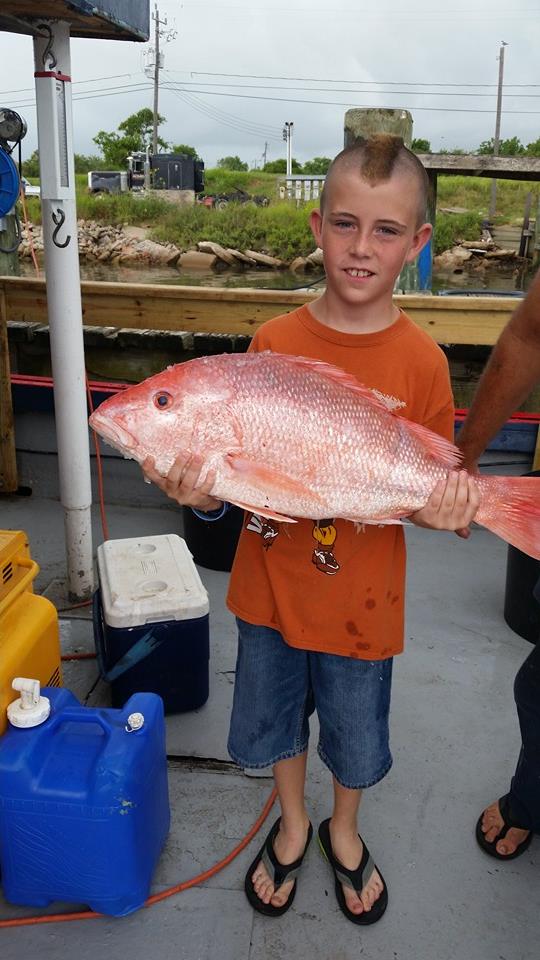
This year’s recreational red snapper season opened on June 1 and closed on June 11th for private anglers, and on July 16th for federal for-hire anglers. The commercial season for red snapper didn’t close this year, nor is it likely to do so in the future, because the commercial red snapper fishery is managed under an Individual Fishing Quota program, rather than through traditional seasons.

Both gray triggerfish and greater amberjack closed to recreational fishing on June 1 for the regularly scheduled closure, and never re-opened because the recreational annual catch limits for both species had already been met. The commercial season for greater amberjack closed on July 17th after the commercial annual catch limit was harvested. The commercial gray triggerfish season remained open for the duration of 2016 because the commercial annual catch limit is not projected to be met.

You may be asking yourself why we are having trouble managing these three species to ensure ample fishing opportunity, especially since you’re seeing more of them now than you have in recent years, or possibly ever.

Photo: Clinton Fewell
Red snapper, greater amberjack, and gray triggerfish are all rebuilding.  The stocks are rebounding, but still require conservative catch limits.  A result of a rebuilding program is that as a stock gets healthier and more abundant, fish become easier to catch.  As catch rates increase fishermen tend to fish more often and new fishermen enter the fishery.  In addition, some stocks even expand their range as they rebuild so more fishermen across the coast are able to access to them.  Once a shortened fishing season is announced, fishing effort can intensify as some fishermen fish harder during the open days.  Consequently, annual catch limits are often harvested more quickly.

This issue is compounded further in rebuilding stocks that are managed with a payback accountability measure.  If an annual catch limit is exceeded, then the following year’s annual catch limit must be reduced to account for the overage; further reducing the annual catch limit from the previous year.

This is exactly the cycle we are stuck in for gray triggerfish.  In fact, there will be no recreational gray triggerfish season in 2017 because the recreational harvest for 2016 is estimated to double the annual catch limit.  The resulting payback has left the 2017 recreational sector with an annual catch limit too low to allow for any season at all.

So, when do we expect these stocks to rebuild?  As of 1999, the federal law that oversees fisheries management in the United States, the Magnuson-Stevens Act, mandates that we rebuild overfished stocks within 10 years unless the biology of the stock, other environmental conditions, or international agreements dictates otherwise.

Red snapper has been in a rebuilding plan since the development of the first Gulf reef fish management plan amendment in 1990.  This stock is an exception to the 10-year rebuilding timeline because red snapper are such a long-lived fish.  The rebuilding timeline is set at the time it would take to rebuild the stock in the absence of fishing mortality (estimated 12 years) plus one mean generation time (estimated 19.6 years). The rebuilding plan was established in 2000 and is expected to rebuild the stock by 2032.

Photo: Alex Bender
The greater amberjack rebuilding plan was initiated in 2003.  A 2014 stock assessment determined that the stock continued to be overfished so, the Council set new annual catch limits and increased in the minimum size limit for recreational anglers from 30 to 34 inches fork length. The stock is expected to rebuild by 2019 and the Council expects to receive the results of a stock assessment update this year.

Gray triggerfish has been overfished since 2006.  A 2011 stock assessment indicated that the stock was not rebuilding quickly enough to make the 10-year rebuilding timeline, so the Council revised the gray triggerfish rebuilding plan. The Council decreased annual catch limits and closed commercial and recreational sectors during the spawning season in an attempt to rebuild by 2017.  A 2015, a stock assessment indicated that the gray triggerfish is not rebuilding on schedule and continues to be overfished despite efforts to rebuild.

The Council is currently working on Reef Fish Amendment 46, which considers extending the rebuilding timeline for gray triggerfish.  The Council’s current preferred alternative is to maintain the current  annual catch limits and annual catch targets.  The Council is also looking at modifying the closed season, bag limit, and increasing the minimum size limit.

As you can expect, 2017 will bring another year of tough limits for red snapper, greater amberjack, and gray triggerfish.  Our stocks continue to improve and we continue to work towards finding management solutions that will provide the best recreational and commercial fishing opportunities possible.

Of course, we do manage numerous other fish.  This chart showing unadjusted 2017 annual catch limits and allocations for our most popular fish in the Gulf of Mexico should lend some insight into the coming fishing year.  


Similarly, this recreational season calendar will show you which species you can target throughout the year. (Here is a PDF version to print)

We continue to ask for your help and perspective as we make tough fishery management decisions.  Please visit the thermometer page on our website to learn what issues we are currently addressing and submit your comments: http://gulfcouncil.org/fishery_management_plans/scoping-thru-implementation.php

As always, you’re welcome to contact us directly at gulfcouncil@gulfcouncil.org with any thoughts, questions, or concerns you may have.

Monday, January 4, 2016

2016's Most Wanted Fish

Photo: Glen Balinger
We’ve taken another trip around the sun. The most distinctive feature of the new year for federal fisheries management is that we start fresh; our annual catch limits reset and we begin harvesting anew. As of 12:01 AM January 1, zero pounds of fish were harvested and our 2016 annual catch limits are at the starting line. Lets take a look back at last year to gain some perspective on what this reset really means.

An annual catch limit is the amount of fish that can be harvested from a stock or group of species that make up a stock complex, in a calendar year. For many of our “most wanted” fish species, once the annual catch limit is harvested, the fishery must be closed. In 2015, red grouper fishing was fantastic. Because they were so easy to catch, the recreational sector harvested nearly its entire annual catch limit by early fall, and the season had to be closed for the rest of the year. Similarly, amberjack, which has a conservative annual catch limit because the species is overfished and under a rebuilding plan, was closed to commercial fishermen in July and to recreational fishermen in September when each sector harvested its annual catch limit.

Photo: Mike Jennings
If we harvest more than the annual catch limit in a given year then we have to pay back the over harvest in the following fishing year or, prevent overharvest from happening again.  This is exactly why the recreational gray triggerfish season closed so early last year. In 2014 the recreational harvest of gray triggerfish far exceeded the annual catch limit. To account for the overage, the excess catch was subtracted from the 2015 annual catch limit. This left the recreational sector with 54,307 pounds to harvest and forced the federal fishing season closure in early February. 

Many of our most popular fish in the Gulf have more than one annual catch limit. In some cases the stock annual catch limit is subdivided to create separate commercial and recreational annual catch limits. This ensures that if one sector exceeds its annual catch limit then that sector will be responsible for the consequences (as long as the sector overage doesn’t cause the entire stock annual catch limit to be exceeded.)

This year, red snapper experienced two interesting shifts in the subdivision of the stock annual catch limit. First, the Council shifted the allocation among commercial and recreational sectors. Fifty one percent of the red snapper allocation was harvested commercially with the remaining 49% going to the recreational sector. In August of 2015, the Council decided to increase the recreational allocation to 51.5% and allocate the remaining 48.5% to the commercial sector (this rule has not yet been implemented, but is expected to become final in 2016).  Second, the Council decided to subdivide the recreational allocation among two sub-sectors of the recreational fishery. For-hire red snapper anglers (charters and headboats) were allocated 42.3% of the recreational annual catch limit, and private recreational anglers were allocated 57.7%.

Photo: Mark Miller
Moving ahead to our upcoming fishing year with fresh, unharvested annual catch limits. According to the 2015 landings data we have so far, it looks like, with a few exceptions, we did a pretty good job of staying within our harvest limits. This means few species will have adjusted annual catch limits to compensate for last year’s overages.

The commercial greater amberjack annual catch limit was exceeded, and that sector will have to pay back its overage this year. Fortunately, the overage was less than 3%, so it will be a small reduction. Similarly, the tilefish stock annual catch limit was exceeded by nearly 3% and will be reduced by the same amount for the 2016 fishing year.

Unfortunately, recreational gray triggerfish experienced another significant overage, which isn’t surprising because the 2015 adjusted annual catch limit was so low. As a result, this year’s annual catch limit will be adjusted to account to that overage, so we can expect another abbreviated recreational gray triggerfish season in 2016.

Here is a chart showing the unadjusted Annual Catch Limits and allocations for our most popular fish in the Gulf of Mexico for 2016. 


All of us at the Gulf of Mexico Fishery Management Council look forward to the 2016 fishing year. Many of our fish stocks are improving and we’re working together to find management solutions that allow us to sustainably manage our Gulf fisheries while providing the best commercial and recreational fishing opportunities possible.

Thursday, February 12, 2015

Red Snapper: Higher Harvest Limits on the Horizon

Photo: Joseph Cawthorn
Lately, much of the buzz about red snapper management has been less than positive. With sector separation, ever shortening seasons, and allocation on the roster, it’s easy to overlook the good news.

Here it is: The red snapper stock is getting healthier every year; fishermen, scientists, and managers alike know it, and when that happens, harvest limits can be raised.

In January, the Council’s scientific advisors (the Scientific and Statistical Committee) met to review a red snapper update stock assessment. Although the assessment was completed before 2014 landings data were available, results of the assessment suggest good news. The Council could increase allowable harvest by two million pounds for 2015 and beyond. An increase from 11,000,000 pounds to 13,000,000 pounds would bring the allowable harvest to its highest level in history.

Photo: David Payne
But wait, there’s more. Preliminary landings data from 2014 was reported to the Gulf Council during its most recent meeting in Alabama. The provisional landings estimates for 2014 indicate that the catches last year were lower than they were in 2013.  This means that more fish were left in the water in 2014 to spawn and contribute to stock biomass levels. The stock assessment scientists reviewed the 2014 provisional landings and reported that the acceptable biological catch could potentially be increased by nearly a million more pounds. However, the Council cannot use these increased projections to set 2015 quotas until its scientific advisors review the projections and approve new acceptable biological catch levels.


Photo: Kale Reynolds

In an effort to ensure the highest catch levels possible for this year, the Council has scheduled some special meetings to make the changes necessary to increase the 2015 red snapper annual catch limit.

On February 19, 2015, from 2-4 pm EST, the Council’s Scientific and Statistical Committee will meet via webinar to review the provisional 2014 landings and formally suggest overfishing limits and annual catch limits for 2015 and beyond. You’re welcome to listen to that meeting live.


Then, on March 3, 2015, from 1-4 pm EST, the Council will meet via webinar to review the scientific advisors’ recommendations and decide on an annual catch limit for this year and potentially future years. The Council will host public testimony during that meeting; you’re welcome to listen live andgive testimony.