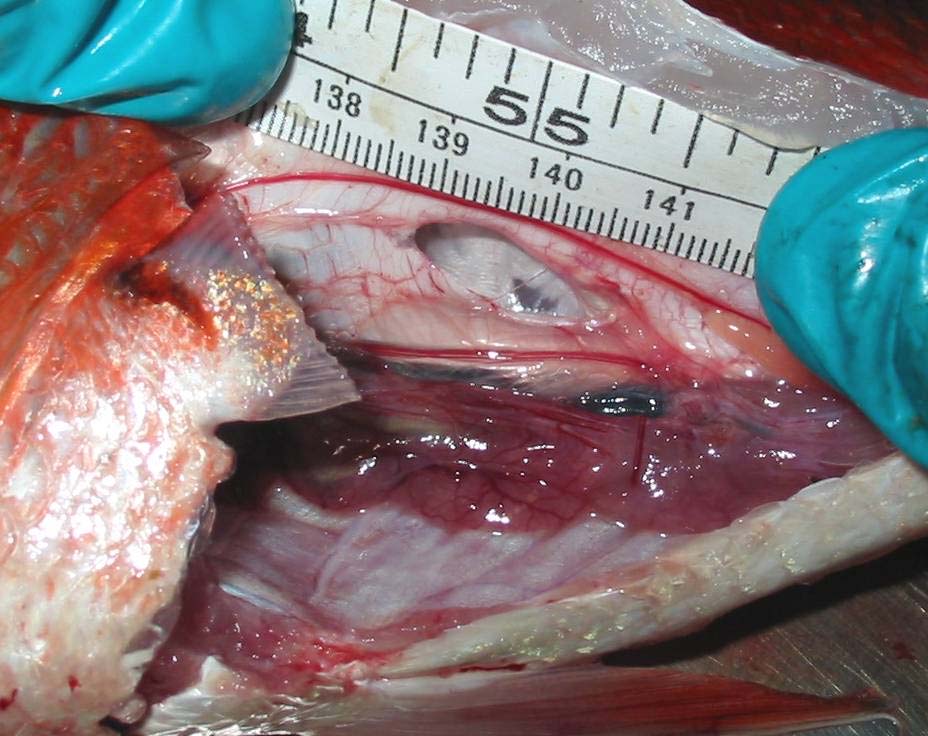
The science that informs fishery management is incredibly
complicated, and the management decisions that are made using that science can
be controversial. While the members of the Gulf of Mexico Fishery Management Council are knowledgeable about specific aspects of the harvest, conservation,
or business of Gulf fisheries, they’re not always scientists - but they don’t
have to be. The Council relies on the Southeast Fisheries Science Center to
assess fish stocks and provide them with the science necessary to make informed
management decisions.
 |
| FWRI deploys a video array |
Every five years the National Marine Fisheries Service asks
the regional fishery management Councils for a “wish-list’ identifying their
fishery monitoring and research priorities. The Southeast Fisheries Science
Center, which is responsible for the Gulf, Caribbean, and South Atlantic Councils,
incorporates the priorities of each Council into its own research plan.
Below you’ll find a summary of the Gulf Council’s highest priority
items for 2015 - 2019. The full document
provides a much more comprehensive list of research and monitoring priorities.
The research and monitoring priorities are broken into three
categories. The first one focuses on broad, multi-purpose research programs
that aim to collect data for a variety of species over a long period of time. The
Council has asked for enhanced:
 |
Size data is collected for tag and recapture study
|
Fisheries-Independent Sampling
Specifically, more video and trawl surveys should be conducted in the
eastern Gulf. Vertical, bottom long-line, visual, and larval studies should be
conducted to better understand the abundance of various sizes and ages of fish.
This will help determine the number of young fish that could become
reproductive and harvestable adults.
Fisheries-dependent sampling
Existing recreational and commercial data collection programs should
continue to achieve better coverage to collect data on abundance, size and
species of fish landed. Electronic data collection systems should be developed
for the charter for-hire vessels to improve timeliness and accuracy of
reporting.
Social and economic monitoring
A study of human attitudes, behavior, and reliance on marine fisheries
should be developed to monitor changes in communities over time, particularly
due to changes in recreational and
commercial fishing regulations.
 |
Hooks ready for longline survey
|
Estimations of bycatch and discards
Observer coverage and data collection on bycatch from commercial shrimp
trawlers, longliners, and vertical line fisheries should be enhanced. Continued
development of technologies including cameras, phones, and tablets should be
utilized to collect estimations of total discards and discard mortality rates
in all sectors.
 |
| Diver performs visual survey |
Red snapper – More efforts should be directed toward determining the effects of the oil spill; the influence of artificial reef structures on the population and spatial distribution across the Gulf; and the ecological effects of population expansion specifically, as it relates to interactions with other species.
Greater amberjack – More age and growth studies should be performed to determine size at age, and work should continue to verify the size of females at reproductive maturity.
Gray triggerfish – Additional studies on the aging, catchability of dominate males during the spawning season, and movement of triggerfish should be conducted.
Next, the Council focuses on economic and socio-cultural research and monitoring needs. Future fishery management challenges will increasingly pertain to the social environment, so a better understanding of the human dimension of fisheries is necessary.
1. Effects of proposed management changes on recreational and commercial fishingEvaluations of the economic benefits, participation rates, and behavior of all modes of recreational and commercial fishing should be performed to enhance understanding of the social implications of management changes including size limits, bag limits, quotas, seasons, and marine reserves.
2. Development of regional economic modelsData should be gathered and tools should be developed to assess the regional economic effects of regulations or environmental events such as hurricanes and red tides.
The role of the Gulf Council in the research and monitoring side of fisheries management is often confused. The Council isn’t responsible for collecting or interpreting fisheries data, nor does the Council assess the health and size of fish stocks. Rather, the National Marine Fisheries Service and the Southeast Fisheries Science Center perform and report the science to the Gulf Council for use in management decisions. The Council simply takes an advisory role in directing the scientists on where to focus their research. As you can see, the Gulf Council has identified some very important research and monitoring needs that will help ensure the science fits the needs of the decision makers to better inform fisheries management decisions.
Greater amberjack – More age and growth studies should be performed to determine size at age, and work should continue to verify the size of females at reproductive maturity.
Gray triggerfish – Additional studies on the aging, catchability of dominate males during the spawning season, and movement of triggerfish should be conducted.
Next, the Council focuses on economic and socio-cultural research and monitoring needs. Future fishery management challenges will increasingly pertain to the social environment, so a better understanding of the human dimension of fisheries is necessary.
1. Effects of proposed management changes on recreational and commercial fishingEvaluations of the economic benefits, participation rates, and behavior of all modes of recreational and commercial fishing should be performed to enhance understanding of the social implications of management changes including size limits, bag limits, quotas, seasons, and marine reserves.
2. Development of regional economic modelsData should be gathered and tools should be developed to assess the regional economic effects of regulations or environmental events such as hurricanes and red tides.
The role of the Gulf Council in the research and monitoring side of fisheries management is often confused. The Council isn’t responsible for collecting or interpreting fisheries data, nor does the Council assess the health and size of fish stocks. Rather, the National Marine Fisheries Service and the Southeast Fisheries Science Center perform and report the science to the Gulf Council for use in management decisions. The Council simply takes an advisory role in directing the scientists on where to focus their research. As you can see, the Gulf Council has identified some very important research and monitoring needs that will help ensure the science fits the needs of the decision makers to better inform fisheries management decisions.