Showing posts with label status determination. Show all posts

Wednesday, January 13, 2021

January Council Meeting Preview

The Gulf of Mexico Fishery Management Council will meet by webinar January  25-28, 2021. The Committee and Council Agendas, and meeting materials are available on the Council Meeting Webpage. You will be able to join the webinar at this link during the meeting. 

Public testimony will be held on Wednesday, January 27, 2021 from 2:30 – 5:00 PM eastern. Details on how to successfully join the meeting and provide testimony can be found here.

Additionally, the Gulf Council and NOAA Fisheries will host a question and answer session with the public from 5:00 – 6:00 PM on Tuesday, January 26, 2021. If you want to speak to ask a question, you must join the webinar online. Alternatively, during the meeting, you can email questions to gulfcouncil@gulfcouncil.org or text them to (813) 317-6220 and a staff member will ask on your behalf. To listen in by phone, call :  1- (631) 992-3221, access code:  142.143.734

The Council is scheduled to take final action on four items at this meeting. Below is a brief description of each item under consideration and information on how to learn more and submit comment:

Lane Snapper Catch Limits and Accountability Measures

The most recent update assessment of lane snapper, which uses the new calibrated landings and effort data from the Marine Recreational Information Program Fishing Effort Survey, shows an increase in stock biomass. As a result, the Council is considering increasing the overfishing limit, acceptable biological catch, annual catch limit, and annual catch target for lane snapper. Additionally, the Council is considering modifying the in-season closure accountability measure for lane snapper because the annual catch limit has been exceeded numerous times in recent years. 

• Read the document
• Watch the public hearing video
• Submit comment


Gray Triggerfish Catch Limits

A 2020 interim analysis of gray triggerfish showed that there was likely an increase in stock biomass in recent years. The analysis suggested an increase to the gray triggerfish acceptable biological catch, so the Council is considering increasing the annual catch limits and annual catch targets accordingly. 

• Watch the public hearing video
• Submit comment


Status Determination Criteria and Optimum Yield for Reef Fish and Red Drum

The Council must define a maximum sustainable yield (MSY), a maximum fishing mortality threshold (MFMT), a minimum stock size threshold (MSST), and an optimum yield (OY) for all managed stocks. These reference points are the basis for determining the health of each stock and are required under the Magnuson-Stevens Act and National Standard 1 guidelines. A list of fish stocks impacted by this document are below:

• Read the document
• Watch the public hearing video
• Submit comment


Red Snapper Recreational Data Calibration and Recreational Catch Limits
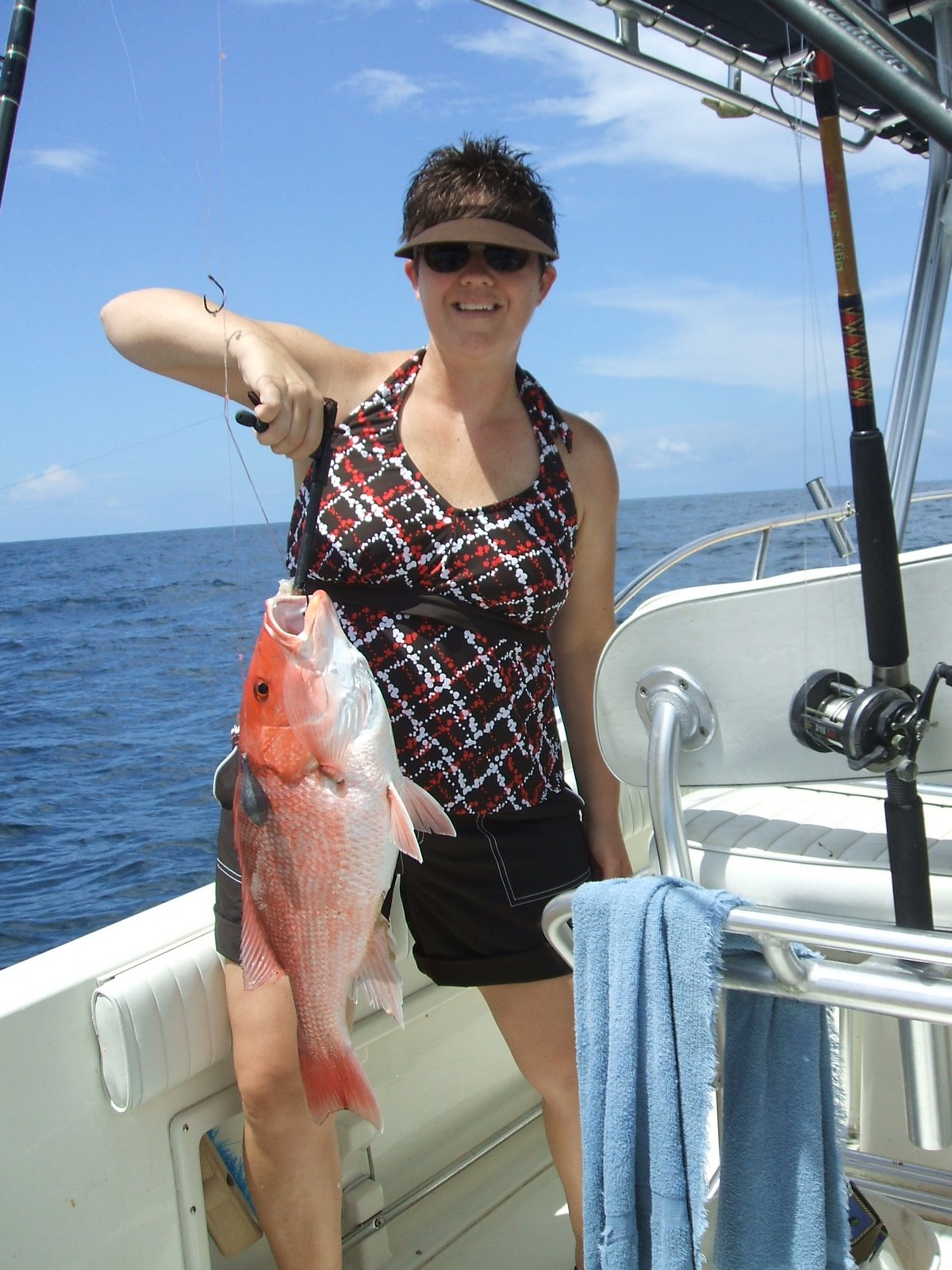
NOAA Fisheries has been using the federal Marine Recreational Information Program (MRIP) in concert with landings and effort data collected from Gulf state data collection programs to monitor private recreational red snapper seasons. Some estimates generated by the state data collection programs differ from MRIP estimates that were used to generate the current annual catch limits.  Adjustments to the state-specific recreational annual catch limits are being considered to account for the harvest monitoring programs used by each state and to reduce the likelihood of exceeding the red snapper private angling component annual catch limit.  

• Read the document
• Submit comment


Thursday, January 23, 2020

January Council Meeting Preview


The Gulf of Mexico Fishery Management Council will meet at the Hyatt Centric French Quarter in New Orleans, Louisiana, January 27-30, 2020. You’re more than welcome to join us in person or via webinar.

Public comment will be held on Wednesday, January 29th, from 1:45 – 5:30 PM. If you can’t join us to comment, visit our “Amendments Under Development” webpage to learn more about what we’re working on and submit comments.

The Agenda and Meeting Materials will help you prepare for the meeting. The following is a brief summary of some of the issues that will be discussed:


Photo: Capt. Jennings
Greater Amberjack
The Council is trying to figure out the best way to manage recreational greater amberjack. In 2018, the Council modified the recreational amberjack fishing year so that the quota renews on August 1st. That was supposed to allow for fishing seasons August – October and then May in the following calendar year, if there was any quota left. Unfortunately, the entire quota was harvested in the fall season that year so, we didn’t get a May season in 2019. (Note: We still don’t know if we’ll have a May season this year and expect NOAA fisheries to give us that news as soon as they can process the harvest data from the end of last year).

The Council is still looking for ways to allow recreational harvest in both fall and spring since different anglers from different parts of the Gulf prefer to fish amberjack at different times. We will discuss a document that considers managing recreational greater amberjack with different zones and bag limits. This Recreational Greater Amberjack Decision Tool will allow you to explore some of the different management alternatives that are currently being considered.

Photo: Capt. Hubbard
Red Grouper
A recent red grouper stock assessment (SEDAR 61) determined that the red grouper stock is smaller than it has ever been. Additionally, the assessment used the new Marine Recreational Information Program’s landings and effort estimates, which more than doubled the estimates of recreational harvest.

The Council will begin working on Reef Fish Amendment 53 which considers modifying commercial and recreational sector allocations and catch limits based on the results of the latest assessment.

Fishing Access in Eastern Gulf Marine Protected Areas
The Council’s Reef Fish Advisory Panel expressed concern that illegal recreational bottom fishing is occurring in Steamboat Lumps and Madison Swanson Marine Protected Areas. Regulations in those areas were created to protect grouper spawning aggregations. Currently, no bottom fishing is allowed in the areas, but trolling is permitted during part of the year. It is difficult to enforce the no-bottom-fishing regulation when trolling is allowed. So, in an effort to ensure grouper spawning aggregations are protected as intended, the Council will take its first look at a framework action that is considers prohibiting all fishing in the Steamboat Lumps and Madison Swanson Protected Areas.

Status Determination Criteria
The Council must define a maximum sustainable yield, a maximum fishing mortality threshold, a minimum stock size threshold, and an optimum yield for all managed stocks. These reference points are the basis for determining the health of each stock and are required under the Magnuson-Stevens Act and National Standard 1 guidelines. The Council will work on a public hearing draft of Reef Fish Amendment 48/Red Drum Amendment 5, which aims to define, and in some cases modify, existing status determination criteria for reef fish and red drum.

Red Snapper Allocation
The Council will continue work on Reef Fish Amendment 52 which considers reallocating the red snapper annual catch limit between recreational and commercial sectors. The Council previously passed Amendment 28, which reallocated red snapper by shifting 2.5% of the commercial sector’s allocation to the recreational sector. However, a lawsuit resulted in the district court decision which vacated Amendment 28 and restored the previous sector allocations of 49% recreational and 51% commercial.

Commercial Individual Fishing Quota Programs
At its last meeting, the Council decided to split Amendment 36B into two separate documents. At this meeting, it will review a new version of 36B which considers requiring individual fishing quota shareholder accounts to be associated with a commercial reef fish permit. The Council will also take its first look at Amendment 36C which considers a mechanism for distributing unused shares reclaimed by NOAA Fisheries, quota banks, and modifying the accuracy of estimated weights in advance landings notifications.

Friday, June 29, 2018

Moving the Bar on What it Means to be "Overfished"

Last year, the Council took action that, in large part, flew under the radar despite its importance. It’s not terribly surprising since the subject matter is both dry and complicated – even for seasoned participants in the Council process.

The Amendment, which was approved in December of 2017, reduced the Minimum Stock Size Threshold (MSST), which is the threshold used to determine when a stock is overfished, for seven of the reef fish species managed by the Council. In addition to reducing the likelihood that a stock is declared overfished, the amendment effectively removed two reef fish stocks from overfished status; however, they are still in a rebuilding plan. Prior to the change red snapper, gray triggerfish, and greater amberjack were all considered overfished. Now, greater amberjack is the only species that remains with overfished status.

In the Amendment, “Minimum Stock Size Threshold (MSST) Revision for Reef Fish Stocks with Existing Status Determination Criteria,” the Council set the MSST for gag, red grouper, red snapper, vermillion snapper, gray triggerfish, greater amberjack, and hogfish, at half of the spawning stock biomass that would be necessary if the stock were to be fished at maximum sustainable yield on a continuing basis (0.50*BMSY (or proxy)). Each of the stocks already had MSST levels defined by separate efforts, but the Council wanted to standardize the criteria and ensure that stocks with low natural mortality rates didn’t alternate between overfished and rebuilt status due to natural variations such as environmental factors. 

The new MSST is set as far below the biomass of a stock being fished at maximum sustainable yield as is allowed our federal fishing law, National Standard 1 of the Magnuson-Stevens Act. It’s also the lowest MSST ever set by the Gulf Council. This means that the biomass of a stock must dip relatively low to be considered overfished. This also means that the likelihood of a stock being declared overfished is very low, but if it happens, a very restrictive rebuilding plan would be required to bring the stock back up to a sustainable biomass.

So, you may be wondering what this all means for red snapper and gray triggerfish, the two species who’s status’ were changed by this amendment.  Both stocks are still under rebuilding plans so, catch limits don’t automatically change. However, the most obvious change from an angler perspective is the removal of the “pay-back” provision. When red snapper or gray triggerfish are considered overfished the pay-back provision requires that any harvest over the annual catch limit must be made up for by reducing the following years harvest by the amount of the overage. In recent years, this has been a major contributor to short seasons for both species. Without pay-back provisions, we should see more consistent annual catch limits and thus fishing seasons hopefully, allowing more fishing opportunities.

While the MSST Amendment didn’t miraculously grow the size of the stocks in the Gulf, it did reduce the likelihood that one of the seven listed species is declared overfished.  In fact, a red snapper stock assessment that was completed this year showed that red snapper is not overfished and even allows for an increase in harvest.  The Council is currently working on another amendment that considers modifying status determination criteria including MSST for remaining stocks. “Status Determination Criteria and Optimum Yield for Reef Fish and Red Drum” is an amendment you may want to pay attention to since it also proves to have implications despite its dry, complicated subject matter.

Monday, July 31, 2017

August 2017 Council Meeting Preview

The Gulf of Mexico Fishery Management Council meets next week at the Marriott Plaza in San Antonio. You’re welcome to join us in person or watch a live broadcast of the meeting.

Public testimony will be held on Wednesday, August 9 from 1:30 to 5:30 p.m. local time. If you can’t come to submit comment in person, visit our “Amendments Under Development” page to comment on, and learn about, different issues being considered.

The meeting agenda and materials will help you prepare for the meeting and decide when to listen in. The following is a quick summary of topics the Council plans to address:

Greater Amberjack Framework Action
Photo: Paul Borowski
The most recent greater amberjack stock assessment (SEDAR 33) indicated that amberjack continues to be overfished and experiencing overfishing. The stock has been considered to be overfished and experiencing overfishing since 1998 despite numerous rebuilding plans that aimed to constrain harvest and allow the stock to rebound to a healthy level. As a result of the most recent assessment, the Council’s Scientific and Statistical Committee provided new Acceptable Biological Catch levels for 2018-2020. The Council plans to take final action on a Framework Action that considers modifying the rebuilding timeline, annual catch limits and targets, and recreational season for greater amberjack.


Reef Fish Management for Headboat Survey Vessels
The Council will discuss the criteria that participants must meet in order to vote in the referendum to determine if Amendment 42 will be accepted. Amendment 42 considers creating an allocation-based program to manage reef fish harvest on headboat survey vessels.


Allocation-Based Management for Federally Permitted Charter Vessels
The Council will review a revised draft of Reef Fish Amendment 41 which considers establishing an allocation based program to manage reef fish for federally permitted charter vessels. The Council plans to discuss the criteria that participants must meet to vote in the referendum to determine if the Amendment will be accepted.


Modifications to Federal For-Hire and Private Angler Red Snapper Annual Catch Targets
Photo: Dr. Carrie Simmons
The Council will review a draft framework action that considers changing the buffers between the red snapper annual catch limits and annual catch targets for federal for-hire and private angler components of the recreational sector. The annual catch targets were put in place in 2014 and the council would like to achieve more accurate and fair annual catch targets to ensure the greatest level of harvest without exceeding the component annual catch limits. 

State Management of Recreational Red Snapper
The Council will take a first look at draft documents that consider allowing Louisiana, Mississippi, and Alabama to manage their harvest of recreational red snapper out to 200 nautical miles. 


Modifications to Commercial IFQ Programs
The Council will review a draft of Reef Fish Amendment 36B which considers modifying red snapper and grouper/tilefish IFQ program participation, distribution of shares from non-activated accounts, restrictions on share and allocation transfers, and allocation caps.


Status Determination Criteria and Optimum Yield for Reef Fish Stocks
The Council will hear a presentation and review an Options Paper on an amendment that aims to define and in some cases, modify existing biological reference points. In order to comply with the Magnuson-Stevens Act and National Standard 1 Guidelines, the Council must set maximum sustainable yield (MSY) proxies, minimum stock size thresholds (MSST), maximum fishing mortality thresholds (MFMT), and optimum yield levels for managed stocks.


Grouper/Tilefish Individual Fishing Quota Program Review
Staff with present the Council with an update on the 5-year review of the commercial Grouper/Tilefish Individual Fishing Quota Program which was implemented in 2010.

Review of For-Hire Permit Moratorium and Transfers

Staff will present the Council with a 10-year review of the for-hire permit moratorium. Additionally, the Council will hear information on the frequency and prevalence of For-Hire Reef Fish permit transfers.

As always, don't hesitate to contact us at gulfcouncil@gulfcouncil.org if you have any questions.